Blog
5 small projects with a sensor kit for electronics beginners
Five evening-sized ideas with the DV Sensor Pack and an ESP32 or UNO board — with principles and wiring tips.
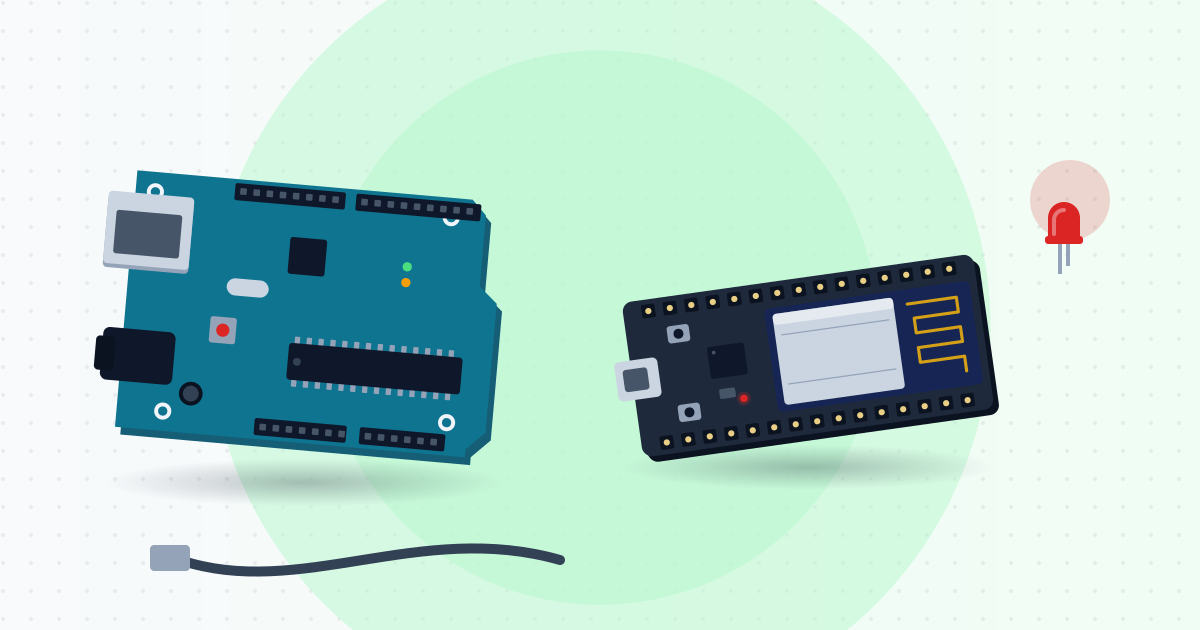
Buying a sensor kit and leaving it in a drawer is common. The best way to learn is a small project you can finish in one evening. Here are five ideas using sensors from the DV Sensor Pack with the ESP32-WROOM-32 DevKit or the UNO R3 board (programmed in Arduino IDE).
Before you start: voltage levels
- The UNO uses 5V logic; the ESP32 uses 3.3V and its GPIO pins are not 5V tolerant.
- If a module must run at 5V and outputs 5V (such as the HC-SR04 Echo pin), use a voltage divider (e.g. 1 kΩ and 2 kΩ) or a level shifter before the ESP32.
- Unplug USB before rewiring and double-check VCC and GND — reversed power is the fastest way to kill a module.
1. Mini temperature and humidity station
DHT11/DHT22 sensor, optional 0.96" I2C OLED, ESP32. Read every 2 seconds and display it; with the ESP32 you can serve a tiny web page on your home Wi-Fi. Don't read DHT sensors faster than every 1–2 seconds.
2. Night light that turns on in the dark
LDR plus resistor as a voltage divider on an analog pin. Turn an LED on below a threshold and add hysteresis (on at 300, off at 400) to avoid flicker. Safety: if you switch 220V lamps with a relay, use an isolated module in a closed enclosure and have an experienced person check it; beginners should stick to 5V LEDs.
3. Doorway motion alert
PIR sensor, buzzer, ESP32. Beep and count when the PIR output goes high. PIR modules need 30–60 seconds to settle after power-up; the two trimmers set sensitivity and hold time.
4. Electronic distance meter
HC-SR04. Send a 10 µs pulse on Trig and time the Echo pulse: distance (cm) ≈ time (µs) / 58. Beep faster as objects approach, like a parking sensor. Average several readings; best range is 2–400 cm on flat, hard surfaces.
5. Plant watering reminder
Soil moisture sensor with red/green LEDs. Calibrate with dry and freshly watered soil. Resistive probes corrode under constant power — power them from a GPIO only when reading, or use a capacitive sensor.
Next steps
Combine projects into a weather station that sends data to your phone, and 3D print an enclosure (or use the SHINDIY 3D printing service). The ESP32 Starter Kit bundles a board, breadboard, wires and step-by-step lessons. Components and boards from SHINDIY carry a 1-month warranty for manufacturer defects; soldered or miswired parts are not returnable, so check your wiring before powering up.